



Oct 22, 2026 Accountants & Bookkeepers
Xero and Bookkeeper360 launch a first-of-its-kind integration that puts Melio payments inside accounting firms’ own platforms
- us
Table of Contents
Nov 3, 2026
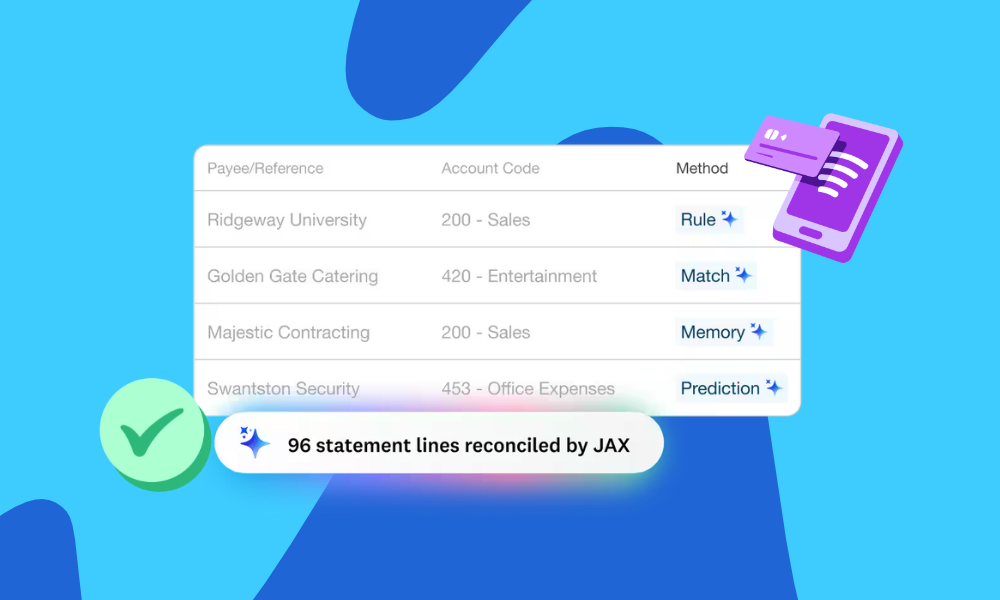
Reconciliation is an essential part of bookkeeping, but repeating the same manual steps every week can take time away from work that benefits from a bookkeeper’s expertise.
Xero’s Auto Bank Reconciliation tool was built to take some of that work off bookkeepers’ plates. It auto-reconciles routine bank transactions when confidence is high, while keeping each reconciliation visible for review. Talk to the people using it day to day, and the more interesting story isn’t the automation. It’s what they’re doing with the time it gives back.
Xero Partner Advisory Council (XPAC) members Katie Williams and Martine Hoosen have brought the tool into their practices. Katie founded The Vault Bookkeeping in the Hunter Valley. Martine’s a 30-year industry veteran and former Non-Executive Director of the Institute of Certified Bookkeepers, now running The Bookkeepers Academy. They’ve shared their top tips for automating bookkeeping workflows.
“I was skeptical [at first] and I was also nervous,” Katie said. “I didn’t know where this would then position our role [as bookkeeper]. But we’re always looking for ways to find efficiencies in the business and create more space for advisory work.”
Martine has spent three decades testing every major technological shift in the profession, from the introduction of the GST through to cloud accounting and bank feeds. Auto Bank Reconciliation was no different.
“As soon as [Xero’s Auto Bank Reconciliation] came out, I was testing it in my business on my own file straight away,” she said. “[I was working out] how can I roll this out to my clients? How can I add extra value to my clients with the extra efficiency created? How can this make my business more efficient, create capacity, bring extra revenue, make me more profitable?”
Neither Katie or Martine treats Auto Bank Reconciliation as a switch to simply turn on. Both describe something closer to onboarding a new team member: cautious at first, closely supervised, with its use expanding as confidence in the workflow grows.
Kate’s advice for anyone starting out is clear: start with smaller, simpler clients first.
“Turn it on for secondary accounts first — a savings account, a GST account — so you get used to how the feed works, before moving into the everyday account,” she said.
She began with the firm’s smallest, monthly and quarterly clients, avoiding businesses with third-party invoicing integrations. Her team checked the feed daily in the first week, correcting anything miscoded, before easing back to fortnightly and then monthly reviews as the file settled.
Martine ran into an allocation issue with one client whose supplier payments went out as multi-pays through internet banking, and the tool initially wasn’t splitting the payments correctly. By reviewing and correcting the lines consistently, Martine saw the results improve over time.
“Once I’d gone through and started correcting things, it began to adapt for that account – not just by the name of the payee, but also by the amounts and references of the transactions,” she said. “Within a couple of weeks of consistent corrections, it was getting it right every time.”
Both bookkeepers still lean on manually set bank rules where certainty matters most, including loan repayments and recurring subscriptions with a known GST treatment, reserving the tool’s own predictions for lower-risk transactions.
Asked what Auto Bank Reconciliation had actually delivered, both emphasised the time saved that was then reinvested into client advisory.
For Martine, the time spent training the tool has paid off. Looking at the last 30 days, she estimates 97% of statement lines are now automatically reconciled.
For Katie, the clearest shift showed up across the whole firm rather than any single client — a productivity gain of about six hours per employee, concentrated in the accounts that used to demand the most manual attention: daily transfers, and merchant facilities such as Stripe and PayPal that now reconcile quietly in the background.
“Our monthly-quarterly package was actually our worst return on investment,” she said. “We had hardly any touchpoints, because most of our time was spent coding and chasing. With the introduction of Auto Bank Reconciliation, that segment has turned around to be one of our biggest revenue makers now.”
Here is where both bookkeepers’ experience points somewhere useful for the wider profession: time saved through automation is a genuine opportunity to look again at how bookkeeping work gets priced.
Martine has spent years encouraging other bookkeepers to think about pricing differently and recently shared her perspective in Xero’s Modern Practice Playbook report. Auto Bank Reconciliation has only strengthened her view.
“[Bookkeepers] should never be pricing purely on how long something takes — it should always be around outcomes,” she said. “If we’re getting transactions processed quicker and accounts reconciled faster, that’s a reflection of our skill and the technology we’ve chosen to adopt. It doesn’t have to mean charging less for the same value we’re delivering.”
Katie sees it the same way, and frames it as a mindset shift her own team had to work through.
“AI is a tool we use to help us do the work we do,” she said. “The value we bring isn’t really about the number of transactions we process — it’s the knowledge, the oversight, and increasingly the advice we can offer because we’re in the accounts so regularly.”
Both women are quick to add that this doesn’t need to happen overnight, or all at once. For bookkeepers used to charging by the hour or by transaction volume, value-based pricing can feel like a big leap. Their advice is to treat it the same way they treated Auto Bank Reconciliation itself: start small, build confidence with a handful of clients, and let the results do the persuading.
For Martine, the shift automation makes possible is about identity.
“These tools allow us to move away from being that stereotypical transaction-based bookkeeper to a trusted advisor who’s delivering insights and value and helping businesses make better decisions,” she said.
For Katie, who sits on the Australian Taxation Office’s BAS Agent Advisory board, it’s about closing a gap she sees clearly from her own client work.
“We are in your accounts regularly,” she said. “So if there’s any everyday, knowledge-based advisory a client needs, we’re going to be the ones seeing it first. I’m all about proactively closing that gap.”
Both Martine and Katie have the same message for bookkeepers who tried Auto Bank Reconciliation early and weren’t convinced, or haven’t tried it yet: how you choose to experiment with Auto Bank Reconciliation is entirely in your hands.
Talk to your Xero account manager about implementing Auto Bank Reconciliation in your practice or register now for our upcoming Auto Bank Reconciliation webinar to learn more.

You're on our global website. Change your region to see information and pricing for another location.